Join CBST for Chanukah candle lighting each night of the festival of lights! Each night a different CBST community group will host the candle lighting. All are welcome every night of Chanukah! 

Also on the Eight Night...

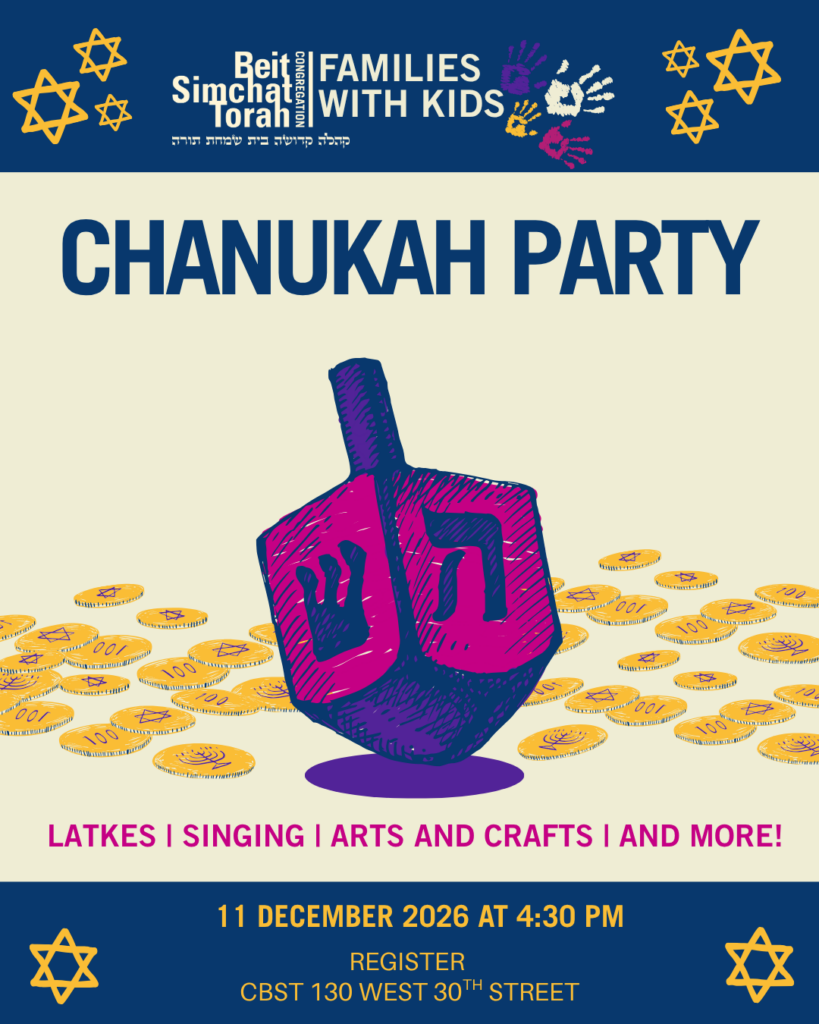
4:30pm | In person at CBST | Register

Enjoy latkes, arts and crafts, story time, singing, and much more. All families are welcome! Stay afterward for Shabbat services and menorah lighting.

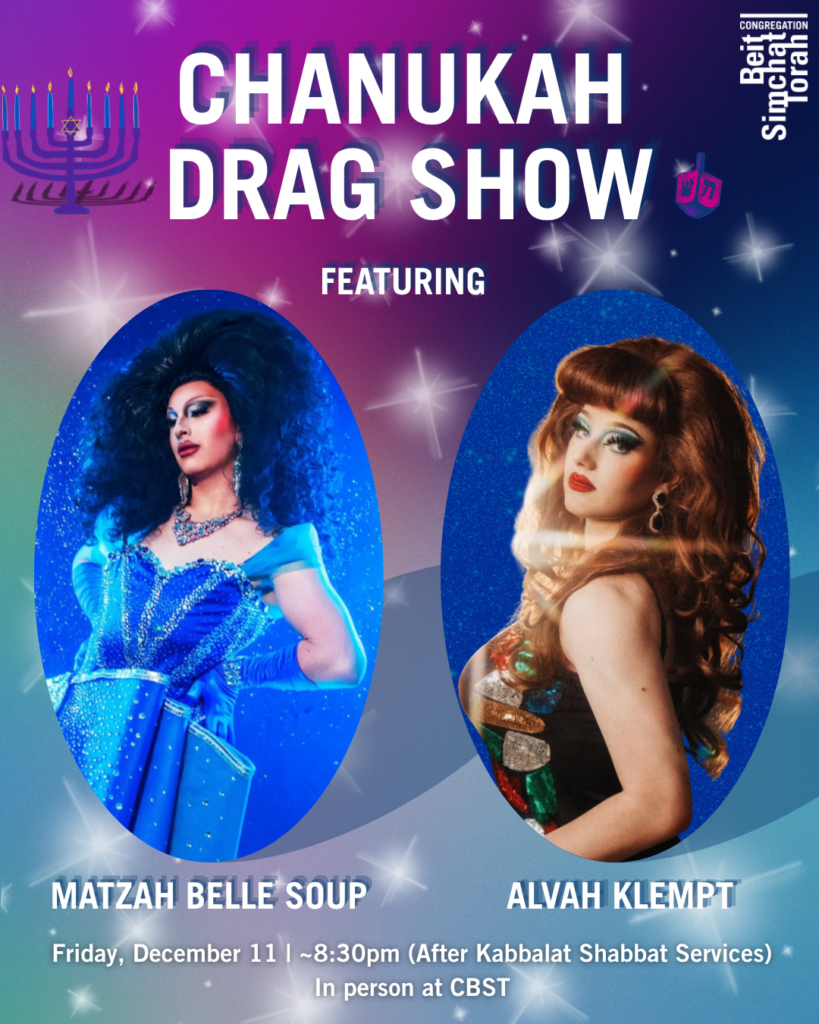
~8:30pm | In person at CBST | Register

We’re back with another Drag Oneg: Special guest Matzah Belle Soup will once again grace us with her presence and put on a drag show fit for the 8th night of Chanukah, including a Chanukah-themed spread of snacks and treats. Festivities begin following Friday night services.

First Night

Friday, December 4, 6:30pm | In-person and CBST Livestream
Part of Kabbalat Shabbat Services

Second Night

Saturday, December 5 | 6:00pm | Zoom 
Hosted by Hosted by Yom Iyyun

Third Night

Sunday, December 6 | 5:30pm | Zoom 
Hosted by Cooperberg-Rittmaster Rabbinical Intern Tzvi Silver

Fourth Night

Monday, December 7 | 5:00pm | Zoom
Hosted by Mishpachah Monday

Fifth Night

Tuesday, December 8, 6:00pm | In person and on Zoom
Hosted by the Board of Directors & the CBST Clergy Team
Join us in person for candle lighting and Chanukah nosh in the lobby.

Sixth Night

Wednesday, December 9 | 5:30pm | Zoom
Hosted by Cooperberg-Rittmaster Rabbinical Intern Leo Linder

Seventh Night

Thursday, December 10, 6:30pm | Union Square | Register 
Hosted by Downtown Jewish Life (DJL)
Join Cantor Sam Rosen and 14th Street Y for our third annual Chanukah in Union Square! Together, we’ll light the menorah, enjoy special music performances by Broadway star Ari Stachel and acclaimed singer Daphna Mor, and create a true New York Chanukah moment filled with community, warmth, and light.
This event will be held in Union Square Northern Plaza. There will be live ASL interpretation.
This event is cosponsored by members of the Downtown Jewish Life Network including Brotherhood Synagogue, Central Synagogue, CBST, Conservative Synagogue of Fifth Avenue, East End Temple, Emanu-El Downtown, Lab/Shul, Town and Village Synagogue, and the Village Temple.

Eighth Night

Friday, December 11 | 6:30pm | In-person and CBST Livestream
Part of Kabbalat Shabbat Services


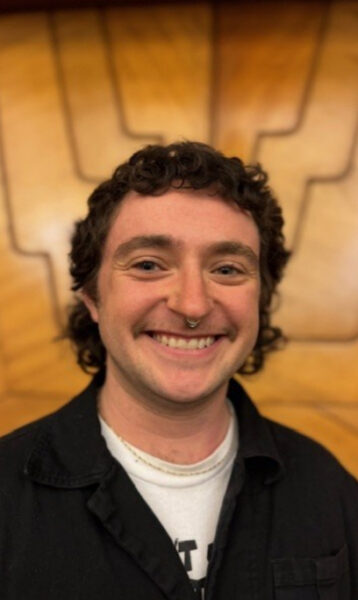
Chanukah Teaching from Cooperberg-Rittmaster Rabbinical Intern Tzvi Silver

The sages Hillel and Shammai debate the following: should we light one candle on the first night of Chanukah and light an additional candle each additional night, to represent that holiness (represented by burning light) increases, or should we light eight candles on the first night of Chanukah and light one less every night, like the candle light may have dwindled in the Temple, as the ancient priests waited for relief?
You likely know that, by and large, Hillel’s opinion (more light each night) wins out. Even as the days grow shorter, warmth and brightness do not diminish. But while light in Judaism often represents the good, and while we might be sorry to see the long days of summer go, darkness has its own metaphorical richness.

A few weeks back, Rabbi Werber read Wendell Berry’s poem “To Know the Dark,” which I know primarily as a song set to music by Katie Hicks ( give it a listen here! ). Here’s the whole poem again:

To go in the dark with a light is to know the light.
To know the dark, go dark. Go without sight,
and find that the dark, too, blooms and sings,
and is traveled by dark feet and dark wings.

There is beauty in the dark: starry skies, privacy, mystery. Before the world was made, it was conceived of in total darkness. We can find our own creative sparks in the long, dark nights of winter.

Whether you light your Hanukkiah by Hillel or by Shammai, more light each night or less, after eight nights we’ll put it back on the shelf and continue watching the days grow shorter until the solstice. In the Chanukah story, the eight nights count the days between the sacking of the Temple and the delivery of fresh stores of holy oil: eight days of fire that wouldn’t be possible without a miracle. And after that, the slower, harder work: cleaning, rebuilding, sustaining the fire ourselves.

If Hillel’s method counts the increasing holiness of the miracle, what might Shammai’s slow reduction of light be counting down to? What meaning can we find in the time without obvious support, when it’s a little bit harder to see where holiness is?

Wishing you a beautiful Chanukah and a restful winter,

Cooperberg-Rittmaster Rabbinical Intern Tzvi Silver